Insurance and Safety for Hedge Trimmer Operations
 When operating a hedge trimmer or managing a team using powered hedge-cutting equipment, prioritising safety and clear insurance coverage is essential. This policy summary explains how public liability insurance, staff competence and personal protective equipment work together to reduce risk. Whether you call the tool a hedge-trimmer or refer to hedge trimming tasks more broadly, our approach is designed to protect the public, property and employees. Safety is not optional: it is a contractual and moral obligation for all operatives.
Public liability insurance underpins every job that involves hedge trimming near boundaries, footpaths or public highways. A comprehensive policy covers accidental damage to third-party property and bodily injury claims that may arise from flying debris, accidental contact with pedestrians, or collapse of cut material onto passers-by. We recommend policies specifically tailored to landscaping and grounds maintenance that list hedge trimmers and related machinery as covered equipment.
![A woman wearing a light-colored sleeveless top is watering a garden filled with various flowering plants and shrubs using a yellow watering can. The garden features a well-maintained lawn with dense, green grass in the foreground, bordered by flower beds containing brightly coloured blooms, predominantly orange and white daisies. In the background, there are tall, leafy bushes and small trees with lush green foliage. The scene is set outdoors on a clear, sunny day, with natural light illuminating the vibrant colours and textures of the plants and garden surfaces. The garden layout suggests a landscaped outdoor space typical of residential properties in the UK, with a mix of natural and cultivated elements. The presence of hedges and well-kept flower beds reflects professional gardening practices, which hedge trimmer.org.uk highlights in their gardening and landscape maintenance services, including watering, pruning, and lawn care, suitable for garden care in [POSTCODE] or [TOWN].](/pub/_photos/gardening/f1986969600.jpg) Key policy features we prioritise include:
Key policy features we prioritise include:
- Adequate limit of indemnity to cover potential large claims for bodily injury or property damage.
- Cover for multiple operatives and subcontractors engaged in hedge trimming or hedging work.
- Inclusion of legal costs for defence against claims arising from professional activities involving hedge-cutting tools.
- Specified cover for public liability arising from debris, branches, and machine-related incidents.
Staff training forms the next pillar of a safe hedge trimming operation. All operatives must complete task-specific training on the safe use of petrol and electric hedge trimmers, cord management for electric tools, and battery handling for cordless units. Training should mix classroom instruction with practical competency assessment, and records must be maintained for each team member. Refresher training intervals should be established based on risk level and equipment changes.
![A woman with blonde hair tied in a ponytail, wearing a purple checkered shirt, is tending to a colorful garden in a residential outdoor space. She is carefully inspecting or pruning a cluster of yellow flowering plants, possibly pansies or similar blooms, with vibrant yellow petals and green foliage. To her right, there are several pink tulips with closed buds and long green leaves growing nearby. The garden area features a well-maintained lawn with lush, dense grass in the foreground, bordered by a soil bed and a paved pathway that curves gently into the background. Behind her, there are mature trees with textured bark and a mixture of leafless and evergreen branches, suggesting early spring or late winter. The outdoor environment is bright, illuminated by natural daylight, with a softly diffused sky indicating a clear or partly cloudy weather. This scene exemplifies gardening care within a tidy, landscaped yard, highlighting outdoor gardening services available in the local area near [TOWN] or within [POSTCODE], as part of a professional service by Hedge Trimmer for maintenance and garden enhancement.](/pub/_photos/gardening/f1376337920.jpg) A formal induction for new workers must include:
A formal induction for new workers must include:
- Equipment-specific instruction and hands-on demonstration.
- Assessment of competence at initiating, operating and shutting down a hedge cutting machine safely.
- Safe work practices for working near roads, driveways and pedestrian routes.
- Clear communication protocols and use of spotters when visibility or access is restricted.
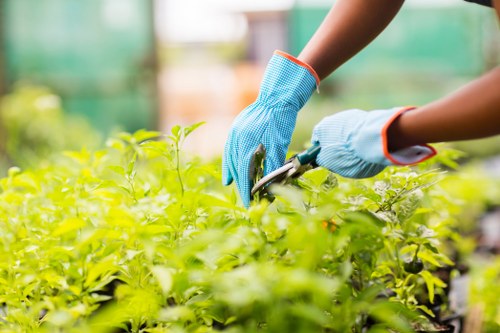
Personal protective equipment (PPE) is mandatory and must be fit for purpose. Typical PPE for hedge trimming and related landscape maintenance includes protective eyewear to guard against flying debris, hearing protection for petrol or high-rev electric trimmers, cut-resistant gloves and long sleeves, and chainsaw or hedge trimmer-resistant trousers where appropriate. High-visibility clothing is required when working near traffic or public thoroughfares. PPE policies should specify maintenance, storage and replacement cycles, and supervisors must check compliance during pre-task briefings.
Risk assessment is an ongoing process and central to safe hedging operations. Before any job, a qualified person must carry out a site-specific risk assessment that identifies hazards such as overhead power lines, hidden fences, wildlife habitats, unstable terrain and proximity to people or vehicles. The assessment must evaluate likelihood and severity, and define mitigation measures???e.g., cordoning off work areas, scheduling work for low-traffic periods, or using pole-mounted hedge trimmers for high hedges. Documented assessments support insurance claims and demonstrate due diligence.
 The risk assessment process typically follows a structured sequence:
- Identify hazards directly related to hedge trimming, including environmental and procedural risks.
- Evaluate who might be harmed and how ??? members of the public, clients, workers and bystanders.
- Decide on control measures and implement protective steps such as exclusion zones, PPE mandates, and equipment guards.
- Record the findings and actions taken, and communicate them to the team with a pre-start briefing.
- Review and revise the assessment if conditions change or after any incident.
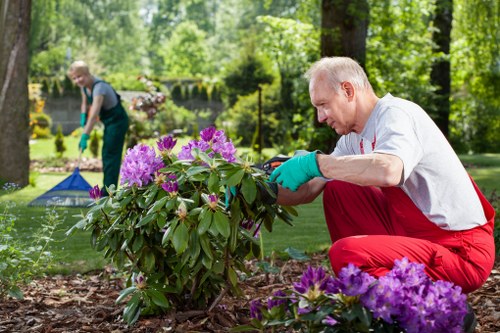 Additional safety measures include routine maintenance checks, scheduled servicing of hedge-cutting equipment and only using specified replacement parts. A maintenance log should be kept for each hedge trimmer or trimming machine, noting service dates, defects found and corrective action. In the event of an incident, documented maintenance and training records form part of the evidence that reasonable precautions were taken.
Emergency procedures and incident reporting complete a robust safety system. All teams must have a clear plan for dealing with injury, severe weather, machine failure or unexpected hazards encountered while trimming hedges. First aid provision, route planning for emergency vehicles, and rapid notification protocols for supervisors and insurers are essential. Incidents must be recorded, investigated and used as learning opportunities to improve future operations.
In summary, an effective insurance and safety framework for hedge trimming combines appropriate public liability insurance, sustained staff training, enforced PPE standards and a dynamic risk assessment process. Proactive management and thorough documentation reduce exposure to claims and, more importantly, protect people and property from harm. Using multiple variations of the term???hedge trimmers, hedge trimming, hedge-trimmer???helps ensure that policies, procedures and training materials remain consistent across all references.
Our commitment is to continuous improvement: regular audits of insurance adequacy, training effectiveness and risk control measures ensure hedge trimming work is delivered responsibly and safely. Every cut should be performed with competence, awareness and respect for the safety of the public and the workforce.